

Will Jennings recently blooted:
I’m increasingly disillusioned with the (policy) ideas ecosystem in the UK - it seems like underlying (social) scientific research is less and less influential and there’s increasing dominance of PR and pseudo-research.
He’s bang right. But the problem is much worse than this. Politics actively rejects serious thinking. We see this not just in the main political parties being happy to see even top universities to decline but also in the main policies of recent years. Fiscal austerity, Brexit or tougher immigration controls all defied the intellectual consensus. And under Starmer the government showed little awareness of fundamental economic ideas such as opportunity cost, regulatory capture, sampling bias, the tragedy of the commons or transactions cost economics; it’s too soon to say whether Burnham’s government will be very much better, but the lack of content in John Healey’s conference speech doesn’t augur well.
All this poses the question: why is politics so resolutely anti-intellectual?
We could blame the media. The right-wing press is mere propaganda, whilst the BBC prefers to report the controversy rather than the facts and does a poor job of reporting economic statistics. The public sphere has suffered a tragedy of the commons, having been captured and destroyed by private interests.
But, but, but. Measured by circulation, newspapers were much more powerful in the 1990s than they are today ( sales of the Sun or Mail were four times as high in 1997 as they are now) but this didn’t stop Gordon Brown engaging with academic research on matters such as central bank independence, the minimum wage, endogenous growth theory or the returns to education. You can make policy intelligently even if you have to get down and dirty to sell it. Blair and Brown knew this; it’s not clear that their epigones do.
Our problem, then, is not just the media.
One paradox of our time is that whilst the educational attainment of the population has increased, there has been a decline in public intellectual standards. The BBC’s first boss, Lord Reith, said:
Our responsibility is to carry into the greatest possible number of homes everything that is best in every department of human knowledge, endeavour and achievement.
It is difficult to listen to Chris Mason, Laura Kuenssberg or Jeremy Vine and believe that this remains the BBC’s mission. But the problem isn’t merely its news and current affairs output. Where are today’s equivalents of TV programmes of the 70s and 80s such as Civilization, The Ascent of Man, Age of Uncertainty or the Great Philosophers?
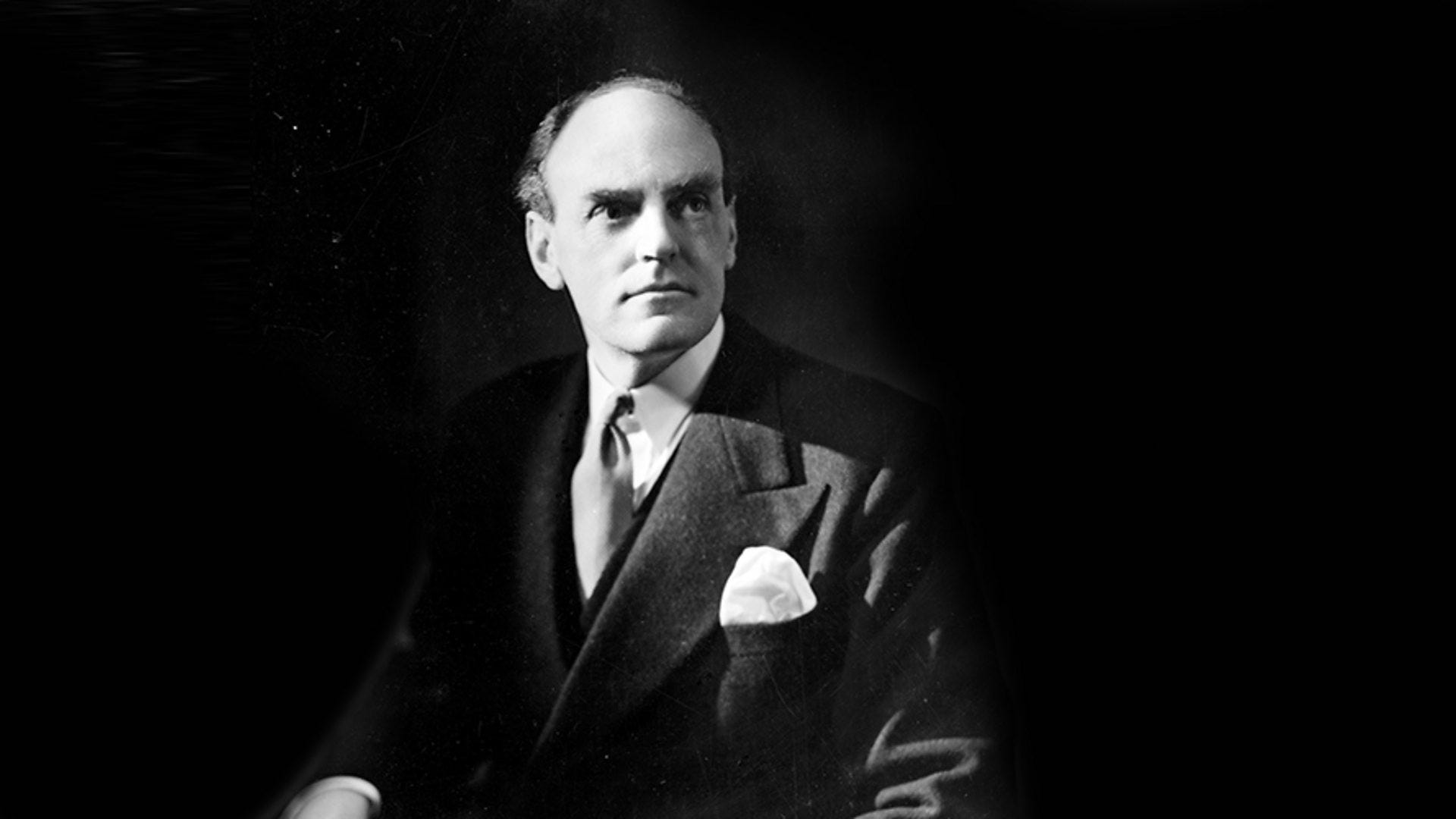
But who would present them? Where are today’s Jacob Bronowskis or J.K.Galbraiths?
If we’re being friendly, we might attribute this loss of public intellectuals to the increased specialization within academia which makes it less likely that somebody can be both a cutting-edge researcher and a great communicator. If we’re being less friendly, we might point to pressure to publish, managerialism, and increased teaching loads as denying academics the space and time to enter the public sphere.
There’s more. One reason why New Labour had such intellectual heft is that it had to at least placate the left and so it had to find policies to show, in Gordon Brown’s words, that “economic progress and social justice can advance together.” Policies such as university expansion, tax credits the minimum wage and even central bank independence were all sold as ways to increase both equality and prosperity. Today, however, the left is marginalized. Politicians need only to placate a few billionaires and political reporters, which naturally has led to a slump in intellectual standards.
The point broadens. The collapse of communism means that western capitalism no longer faces an obvious alternative, with the result that people no longer feel the need to legitimate the system. That has led not only to increased inequality, outright corruption, and the undermining of democracy by billionaires, but also to a lack of interest in defending or improving free market capitalism. Cold warriors needed intellectuals such as Berlin, Friedman or Popper. Today, they can get by with Daniel Hannan.
Here, however, we run into a nasty fact. The west’s victory in the Cold war has led not to a strengthening of liberal capitalism but to the opposite; inequality and stagnation.
Which tells us something - that politicians’ engagement with academic research has not yielded the returns they had hoped. Key New Labour ideas such as central bank independence, a rising minimum wage and university expansion did not lead to better economic growth*. Worse still, this stagnation has caused exactly what Ben Friedman predicted - a retreat into racism and illiberalism.
The result has been that politicians have lost faith in the power of ideas, because it is no longer possible to show that the existing order, with a few tweaks, can leads to economic progress.
What’s more, the response to the rise of the far-right has not been a vigorous assertion of liberal values - the cold warriors’ love of freedom and the open society was insincere - but a kowtowing to irrationalism and an appeasement of “legitimate concerns”. It was a Labour minister (Douglas Jay) who said in 1937 that “the gentleman in Whitehall really does know better what is good for people than the people know themselves.” It’s inconceivable that any of his successors in any party could say such a thing today.
And not just politicians. Academics’ and journalists’ obsession with polling and public opinion betokens a loss of faith in elites’ knowledge and ideas and a deference to a lowest common denominator. This wouldn’t be so bad were it not accompanied by a glaring lack of curiosity. How is public opinion actually formed? Why does it influence policy so much in some areas (immigration) and not at all in others (a wealth tax)? And what are the circumstances in which people really do know better than elites? Such questions are not asked.
A solution to all this would be to escape stagnation, which would have the effect of restoring faith in liberal capitalism and diminishing fascism. But how?
There are in fact, loads of ideas. And there’s a problem with all of them: they all require government to attack vested interests, or what Joel Mokyr called the forces of conservatism. Shifting the tax base from incomes to land would hurt landlords. Simplifying taxes and benefits would put bureaucrats, lawyers and accountants out of work. Stronger competition policy would undermine monopolists’ profits. Empowering consumers would hurt companies that profit from inertia and asymmetric information. More infrastructure investment would alienate nimbys. And so on.
All of which explains Will’s insight. Quite simply, quality research and ideas would be incompatible with British capitalism as it currently exists. When Rosa Luxemburg asked “socialism or barbarism?” she was posing too stark a choice. Ours is between mild reform and barbarism. And it’s not clear which our ruling class will choose.
* “Lead to” is doing some work here. Maybe growth would have been worse without these, but that’s another issue.
This is a great post. I also wonder about the role of the civil service, and the extent to which ‘the brightest and best’ who in the past might have gone into the fast stream now go into (god forbid) management consultancy. And are then contracted back in at vast expense and don’t stick about long enough to actually learn and develop as civil servants because it’s on to the next contract.
So even if they think / learn about policy areas, it’s lost to the state.
«We see this not just in the main political parties being happy to see even top universities to decline but also in the main policies of recent years. Fiscal austerity, Brexit or tougher immigration controls all defied the intellectual consensus.»
It is so wonderful that someone realizes that in a democracy policies should be set by the "intellectual consensus" which is formed by intellectuals which have been directly or indirectly selected and "sponsored" by "wealth creators" and probably come from or work at "top universities" which are the finishing schools of those "wealth creators" and their professional-managerial trusties. :-)
«It was a Labour minister (Douglas Jay) who said in 1937 that “the gentleman in Whitehall really does know better what is good for people than the people know themselves.” It’s inconceivable that any of his successors in any party could say such a thing today.»
Jay and our blogger seem concordant that good government can only be delivered by earnest wykehamist technocrats who would protect gullible ordinary people from the lies of "populists".
«escape stagnation, which would have the effect of restoring faith in liberal capitalism»
As She would say "There Is No Alternative" to liberal capitalism.
As usual the arguments of our blogger implicitly demolish the squalid lie that politics is a contest of interests because being at "The End Of History" we know that there is nothing better for "the national interest" than whig thatcherism run by the "intellectual consensus" of liberal technocrats :-).