
The 35% strategy
It is both electorally expedient and morally correct to ignore large chunks of public opinion.

When he entered Downing Street in 2024 Sir Keir Starmer spoke of a desire to “unite our country.” This was tosh. Any party wanting to win an election must do the opposite: divide it ruthessly.
Under our first-past-the-post electoral system, a party does not need a majority of the vote to win a parliamentary majority. In fact, since 1970 less than 45% has been sufficient. And in a multi-party system a party needs even less: in 2024 Labour won a massive majority with just 33.7% of the vote.
The challenge for any party, therefore, isn’t to “unite the country”. It is to find support from 35-40% and to hang onto it.
Thatcher of course knew this well. She built a coalition of traditional Tories, well-off professionals, aspirational yuppies, white van men and people who’d bought a cheap council house.
In doing so, she taught us two big lessons.
Lesson one is that successful electoral coalitions are not homogenous. Thatcher distrusted the “wets” and many older Tories despised the new money and wannabes who backed Thatcher: Sir Julian Critchley called them “garagistes”. But Thatcher held the coalition together. You don’t have to like people to find them useful.
Lesson two is that you don’t need to “reach out” to your opponents. You don’t need to placate them or acknowledge their “legitimate concerns”. Thatcher didn’t do any of this. She saw her opponents as an “enemy within” to be disempowered. If people aren’t going to vote for you it doesn’t matter whether they think you’re decent but slightly misguided or whether they hate you with every fibre of their being. All that matters is that you keep your own 35-40% on side.
Herein, however, lies a nice coincidence. For a centre or leftist party what is electorally sensible is also morally correct.
One reason for this lies in the old problem of vicious preferences: why should we give any weight to desires to do harm to others? We wouldn’t agree to do so behind a Rawlsian veil of ignorance for fear of our fundamental interests being vulnerable to others’ urges. And nor is there an obvious justification in utilitarianism; the pain suffered by the victims of such preferences probably outweighs the pleasure others get from having their whims indulged. We should therefore say to supporters of Reform’s plan to split up families; create an British-style ICE and massive detention centres; and drive out long-standing residents: “your preferences are no part of civilized politics.” This, of course, is if we have to discuss the matter at all. Which we shouldn’t. A good 35% strategy would crowd the subject off of the agenda simply by putting so many other ideas onto it - mostly about improving growth and public services. Controlling the agenda is crucial.
There’s another reason to ignore many people’s preferences. It’s simply that they are founded upon error. Almost half of voters think immigration has increased recently, even though it is is sharp decline. Many voters are wrong about the composition of public spending: over 20% believe that either overseas aid, asylum seekers or MPs expenses are among the three things that government spends most on when in fact these are tiny shares of spending. And they are wrong too about benefit spending. One survey found that people on average believe that 36.9% of welfare spending goes on unemployment benefit whereas the true figure is less than 5%. They also overestimate levels of benefits fraud: the average guess was 28.1% whilst actual overpayments attributable to fraud are just under 3%.
Such egregious errors mean that peope’s preferences are no guide to their well-being. If you think that cutting unemployment benefits or overseas aid will pay for a decent tax cut you are simply wrong, just as you were if you thought Brexit would pay for big rises in NHS spending, and just as you are if you think lower immigration will improve jobs or public services.
As Daniel Hausman argues (pdf), there’s no reason to satisfy mistaken preferences when these are a bad guide to what will improve people’s welfare.
In fact, there’s a positive reason why we shouldn’t do so. To see it, imagine that university grades, job offers or even jury verdicts were handed out by lottery. There would be righteous outrage. This is because we have a right to expect that decisions that have important effects upon our lives be taken competently. As Jason Brennan has written:
Just as defendants have a right not to be subject to incompetent jury trials, innocent people have a right not to be subject to badly made high-stakes political decisions. Presumptively, if the legitimacy and authority of jury decisions depend on competence and good faith, then so do the legitimacy and authority of all government decisions. (When All Else Fails p88-89)
By this benchmark, government policy aimed at placating those who are simply wrong is noy just unwise but illegitimate.
It is therefore both electorally expedient and morally correct to ignore large chunks of public opinion. Personally, I’d include much of the media in this. It does nothing to keep people well-informed and nothing to improve the standards of governance. And it appeals only to a small minority. The combined daily print sales of the Mail, Sun, Express and Telegraph are probably less than 1.5 million. That’s less than 4% of the electorate - fewer people than go fishing (pdf).
Now, I’ve kept quiet about what the precise policies of a 35% strategy should be. They certainly would not be promises of immigration crackdowns which alienate Labour’s own supporters without winning new ones. What they should involve is an appeal to the material interests of working-age people, tenants and public sector workers and promotion of the social liberalism to which most Labour voters subscribe.
Labour is doing some of this: improving tenants’ and workers’ rights; more support for childcare; and gradually raising public spending. But of course opinion polls and the recent council elections show that it is generally failing. It has learned neither of the two big lessons from Thatcher.
In trying to appease racists whilst telling liberals to “fuck right off” it has lost its own supporters whist not gaining Reform voters: Yougov estimates that 38% of those who voted Labour in 2024 swtiched to the Greens and Lib Dems in May’s council elections, whilst only 6% went to Reform. In chasing a mirage of a homogenous bloc of socially conservative “working class” voters Labour has lost much of its coalition of liberals, young metropolitans, ethnic minorities, public sector workers and trades unionists.
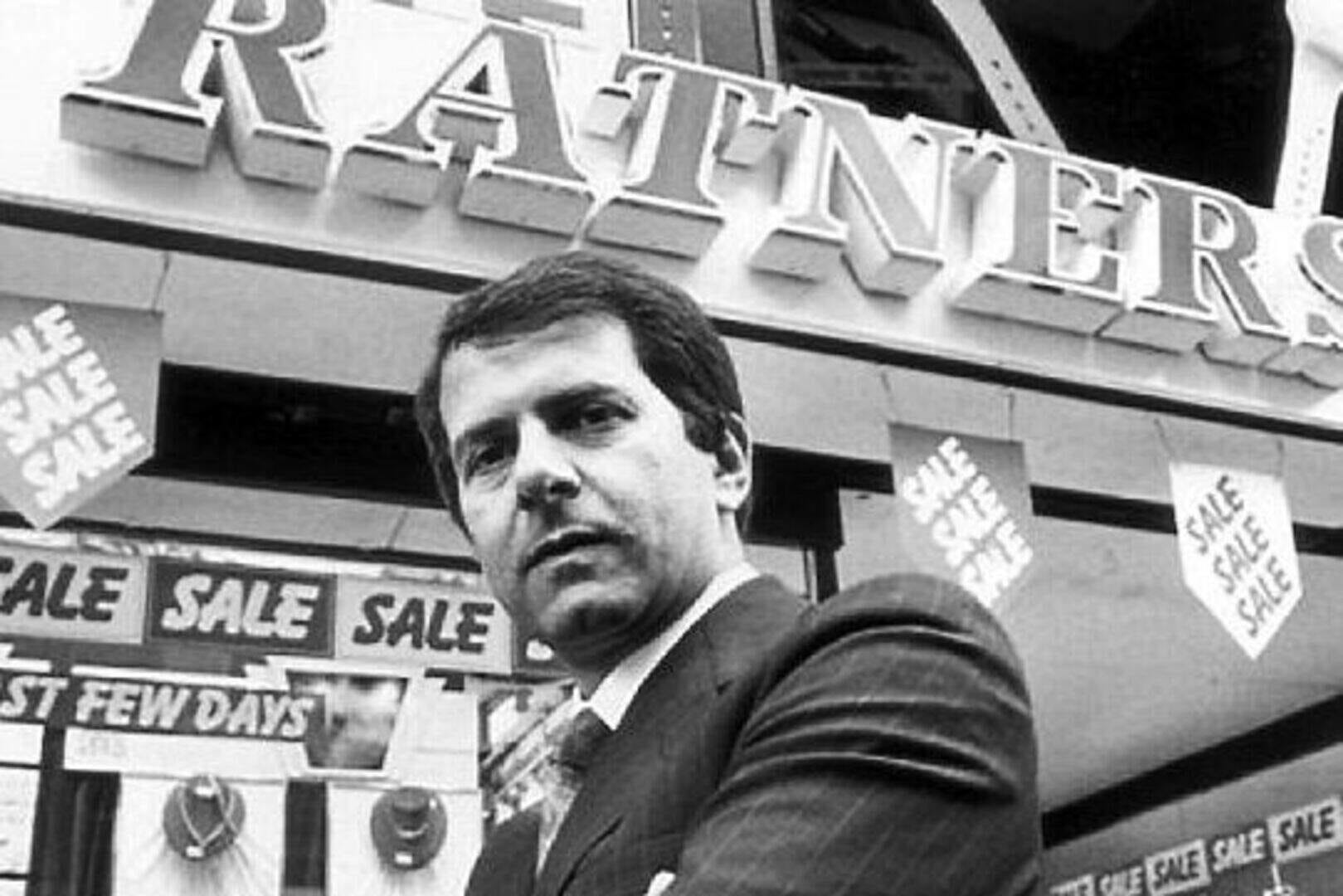
In doing so, it acted in a completely unbusinesslike manner. All good businesspeople know that it’s easier to keep a customer than to win a new one; that you can’t always choose your customers; and that one must never “do a Ratner” and insult your customers. In ignoring all this Labour has been simply grossly amateurish.
A better strategy would have been: “we’re going to hold onto our base and the other 60% of the electorate can fuck off.” Whilst Labour might not say the latter explicitly it should have followed Thatcher in identifying some enemies within, because doing so can help cement one’s own coalition: racists, Tories who spent 14 years wrecking the economy and public services, allies of Farage and Putin, or rip-off landlords and utilities.
All of which poses the question: why has Labour not done this?
It could be that they’ve been misled by the median voter theorem, which just doesn’t apply in a multi-party first past the post system. Or maybe they’ve been misled by the media and X into believing that public opinion is both more right-wing than it really is. Or it could be that Blue Labour ideology (which seems much more “blue” than “Labour” to me) has trumped electoral considerations. Or it could even be that many influential figures in Labour aren’t actually interested in winning the next general election but simply want to “bash the Trots” and get well-paid jobs in the private sector.
Whatever the reason, there is something we know for sure. The attempt to reach out to reactionary and racist voters has failed. Labour needs a new approach - which means learning from Thatcher’s success.
You also have to have credibility, so that those who supported you when you needed them will believe you represent their interests. If you have spent the last few years making it clear that you won't, and that you are more interested in pandering to the so-called 'hero' voters, you have none. It might be that a change of leader will offer at least a chance of turning this round, but it is a big ask of people you have derided, smeared, mocked and expelled. Labour told these people they could "f*ck off", so they have. Burnham would have to make it very clear that things have changed by getting rid of a lot of the party apparatchiks, and clearing out the cabinet of all those that toadied up to the Starmer - Macsweeney project. Highly unlikely.
"All of which poses the question: why has Labour not done this?"
1) Because the Thatcher coalition, which you offer so straightforwardly as a template, did not last in the end. And the explanation for this is a mirror image of your account of Labour's mistakes. It reminded me immediately of a 1994 piece by Angela McRobbie in the New Left Review, where she attributed the loss of popularity of the Tories in the early 1990s importantly to their having finally insulted too many of their customers: https://newleftreview.org/issues/i203/articles/angela-mcrobbie-folk-devils-fight-back.pdf
2) Perhaps the key problem with the 35% strategy is that most of the time it has traditionally been something other than Labour which is in power, due to the nature of first-past-the-post. Over the past century, the all-or-nothing nature of politics under FPTP has resulted in "all" for Labour only 1/3 of the time and "nothing" for 2/3.(*) And your apparent idea that the success rate of Labour can be significantly increased from the historical norm may well be an instance of the same irrational self-confidence which you have diagnosed politicians as suffering from in the past, and which you have suggested is what causes people with a particular kind of personality profile to self-select as politicians. (Remember your own favourite Adam Smith quote: there is a great deal of ruin in a nation.)
(*) The longest Labour has ever been in power continuously is 13 years. By contrast, under proportional representation the Swedish Social Democratic Party was in power continuously for 40 years (44 years if we allow one brief interregnum of 3 months).