
Hating freedom
Why politicians, and many voters, hate freedom.

Freedom is once again under attack in the UK. Labour and the Tories want even more bans upon pro-Palestinian marches; the government wants to ban young people from using social media. And worst of all, Reform wants to detain tens of thousands of “illegal” immigrants - which would of course entail the creation of the apparatus of a police state and the harassment of hundreds of thousands of others; as Chandran Kukathas pointed out, controlling immigration requires the state to reduce the freedom of all citizens.
To someone of my age, whose feeble intellect was formed in the 70s and 80s, this is weird. “In our system, under our principles, the government is there to serve and satisfy the liberties of the people” said the most influential politician of my lifetime. For her, freedom and the rule of law were essential principles - ones under attack now from our main political parties. And for her and her fellow cold warriors the virtue of the west against communism was precisely that it valued freedom.
Which poses the question: why are Thatcherite values now opposed by those who live in the shadow of Thatcher and even by some who consider themselves Thatcherite?
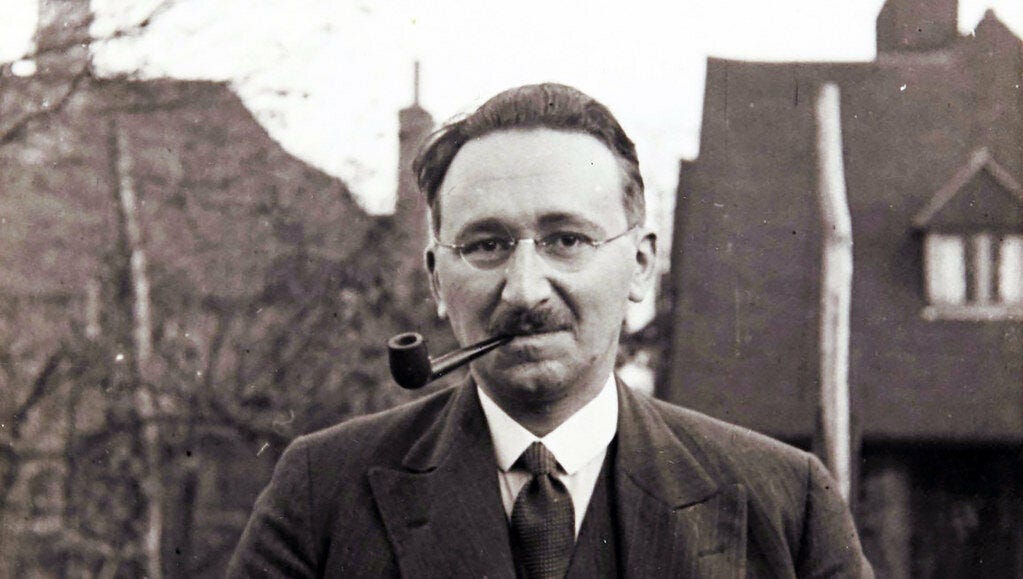
Part of the story, I suspect, lies in the optimism bias. Politicians are selected to be overconfident about their ability to control human affairs from the top-down; you wouldn’t enter politics unless you thought you could “make a difference”. This disposes them to be heedless of Hayek’s argument for freedom:
Since the value of freedom rests on the opportunities it provides for unforeseeable and unpredictable actions, we will rarely know what we lose through a particular restriction of freedom. Any such restriction, any coercion other than the enforcement of general rules, will aim at the achievement of some foreseeable particular result, but what is prevented by it will usually not be known....And so, when we decide each issue solely on what appear to be its individual merits, we always over-estimate the advantages of central direction. (Law Legislation and Liberty Vol I, p56-57)
If we’re being generous, Reform’s desire to bang up tens of thousands of people is the reductio ad absurdam of this optimism bias. It over-estimates what James C Scott called legibility (pdf), the ability of government to read society - in this case, the ability of the state’s goons to distinguish between illegal immigrants and legal ones or British citizens*.
This over-optimism is reinforced by a nastier selection effect: politicians are selected to be psychopaths**. People who are superficially charming, willing to take risks, and who lack empathy are well-equipped to rise to power in politics (and business!), especially in a culture that values “strong leaders”. And psychopaths want to control others.
Although voters in general have only average levels of psychopathy, they too are prone to the optimism bias. “I never thought they’d eat my face says woman who voted for the Leopards eating people’s faces party” is a meme for a good reason. It describes, for example, those who voted for Brexit only to later complain about long airport queues and difficulties in owning their home in Spain. And the same applies to support for Reform’s mass detentions; the party’s supporters think it will be other people who get stopped and detained, oblivious to the fact that even the whitest of Brits cannot be easily distinguished from a Romanian or Pole.
Which brings us to another reason why people hate freedom; doing so is an expression of hatred for out-groups.
Immigrants and ethnic minorities, however, are not the only out-group. So too are young people. Why ban these from social media when older ones are just as likely (or more so) to be radicalized online? And mightn’t such a ban harm isolated youngsters - such as neurodivergent or trans ones - who can find a community online that they can’t otherwise? Who cares? Youngsters are the out group. And that’s what matters.
All this, however, runs into a question. None of these biases against freedom are new, as Hayek (perhaps partially) pointed out. Why then, did politicians at least feel the need to pay lip-service to freedom in my formative years when they don’t now?
In many cases, I suspect, it’s because their professed love of freedom was insincere. Talk of freedom was a way of trying to legitimize western governments during the cold war in the face of communist tyranny, and to legitimize hierarchy and the pursuit of profit. That’s why the right talked more about the lack of freedom suffered by Russians than that suffered by black South Africans, Chileans or Indonesians. It’s also why they were much keener on free markets when mass unemployment was forcing wages down than they are when those markets raise wages or threaten the profits of incumbent companies. And it’s why they have never been interested in people’s lack of freedom in the workplace. As Corey Robin has written:
When the libertarian looks out upon society, he does not see isolated individuals; he sees private, often hierarchical, groups, where a father governs his family and an owner his employees.
Also, what the right today means by freedom is instead mere narcissism - the belief that they should be free from social obligations. This is why they hated wearing masks during Covid; hate speed restrictions; oppose efforts to curb carbon emissions; and want “free speech” for racists but not for supporters of Palestine.
By contrast, it is the left that is more obviously sincerely pro-liberty: wanting to legalize drugs as Zack Polanski does, and wanting more rights to protest, are libertarian policies but they are also leftist impulses.
It’d be tempting to infer from all this that it is the left, and not the right or centrists, who are now the true champions of freedom. Perhaps so: personally, I’ve long thought of myself as having a large libertarian streak. Whether there are many votes to be had in such stance is, however, questionable.
* Alternatively, of course, it might be that they simply don’t care about such distinctions.
** Of course, this isn’t to say they are all psychopaths (or even that this is always a bad thing!), merely that there’s a bias towards them.
Rosa Luxemburg’s famous statement “Freiheit ist immer die Freiheit des Andersdenkenden” is outstanding. It translates to “Freedom is always freedom for the one who thinks differently.”
Originally I understood it ironically: that Rosa Luxemburg defined freedom in such a way that I could be free from those who think differently. No, on the contrary, it is that everyone has the freedom to think differently.
Therefore, there is a necessary addition in the English translation: “Freedom is always, and exclusively, freedom for the one who thinks differently.”
Well… I often think that Marx and Hayek aren’t always totally in opposition; that it is possible to be in some sense a “Hayekian Marxist” even though that sounds kind of insane.
Hayek says that top-down implementation of things often leads to ruin, and as someone with an evolution background I very much agree. Freedom in the sense he talks about is important because a lot of human innovation is effectively evolutionary; it involves making lots of mistakes, iterating on what works, and slowly arriving on a solution. Saying “I’ll intelligently design a solution” in that kind of area is often, in my view, very hubristic!
Except. What if Marx is right about what happens to a system like this over time? Everyone might be free to make mistakes at one level of a system… but over time, that system itself might effectively force their actions at a higher level. I don’t think Hayek satisfactorily answers “what happens in a distributed tyranny?”— if the rules of a system themselves effectively demand freedom is eradicated at a human level.
Hence the nightmare position that both sides are right in their critiques, and wrong in their solutions. From individual freedom over time, a tyranny emerges that’s worse than the one you got rid of. From a desire to build something better than what we have, we undermine the complex things that prevented stuff getting even worse!
This is, more or less, my own political position. It has the disadvantages of being depressing, and being unclear as to what one should do in the world. I’m not surprised it’s quite unpopular