
Against "politics"
Westminster politics is so dumbed down that we should try to ignore it.

On my first morning of retirement I switched from the Today programme to Radio 3 and these days I never watch any politics or current affairs programmes on TV; all I know of them are the clips I see on Twitter. I'm not interested in politics*.
This seems a banal statement; millions of people share my lack of interest.
But I'm perhaps unusual among these. I was sufficiently interested in politics to want to study it at university; I was an active member of a political party for years; and I write what many of you consider a political blog.
What's more, my reasons for a lack of interest are not the usual ones. I don't think politicans are "all in it for themselves": I suspect they are no more dishonest or money-motivated than the rest of us would be in a comparable environment. And, despite Starmer's efforts, I don't think "they're all the same" ; there are important differences between the Tories and Labour for example on net zero or workers' rights.
Instead, one reason for my lack of interest is that politicians and those who report on politics are not much interested in what interests me, namely the social sciences. As Phil has pointed out, there's excessive interest in the biographies of politicians to the neglect of emergent social trends such as the rise of immaterial labour which has contributed to "wokeism"; the economic stagnation that's led to illiberal reaction or the rise of an unpropertied graduate cohort. Such neglect has caused the political class to be systematically surprised by important developments such as Brexit, Corbynism or the toxicity of Boris Johnson.
One manifestation of this ignorance is the attitude to public opinion. Both main parties believe the "customer is king" (except, obviously, when the public want nationalization or wealth taxes) wherein their only objective is to discover what opinion is. This forgets that opinion can be multi-faceted, mutable by the economic environment, media or by political activity, and a poor guide to people's well-being.
Another manifestation is the inability to see what politics even is. We need politics because there are sometimes (often) collective action problems wherein what is rational for each individual is often bad for everybody - the sort of problems that cause public goods and infrastructure to be under-supplied and public bads such as pollution and carbon emissions to be over-supplied. The government, however, has often been unaware of this - for example when Cameron urged drivers to fill up on petrol in advance of a fuel drivers' strike; or in their belief that whilst one benefit claimant might be able to find work not all will be able to.
Perhaps the costliest example, though, was Osborne's austerity which failed because of the well-known (to us at least) paradox of thrift - that if we all try to save the result is a drop in incomes and hence lower savings.
Such economic illiteracy was however not confined to then. Having tightened policy when they should have loosened it in 2010 the Tories loosened it when they should have tightened it in 2022. This is neither Keynesian nor Friedmanite but Morecombeite - playing the right notes but not necessarily in the right order.
But there are other examples. We also see it in the idea that privatization is a magic money tree, ignoring the fact that if we can't afford state pensions and healthcare then we can't afford private ones either. We see it too in much of climate policy where, as Eric Lonergan has noted, politicians use the wrong chapter of the textbook in imposing taxes and restrictions on carbon emissions rather than encouraging the use of substitutes to carbon technologies. And we also see it in utility policy, where the importance of regulatory capture is largely ignored.
The sound of political discourse is as offensive to any economist as would be an out-of-tune orchestra to a sensitive musician. Why should any of us listen to that?
Such innocence of intellectual matters is not confined to economics, however. There's pitifully litte connection between politics and philosophy. Whereas Thatcher often cited Friedman, Popper and Hayek as influences her epigones of all parties make no effort at placing themselves in any intellectual tradition. In political philosophy John Rawls is dominant. But any politician applying his difference principle - that social and economic inequalities "are to be to the greatest benefit of the least advantaged members of society" - would be so far to the left they'd be accused of antisemitism.
A lack of interest in philosophy would not be so bad if it were replaced by technocratic empiricism. But it's not. As we've seen in macro policy, the economic impact of Brexit and the possible decision to have HS2 stop in the middle of nowhere the government is heedless of empirical fact. And from Labour we rarely hear Blairite talk of evidence-based policy-making or "what matters is what works", perhaps because such principles would alert us to the fact that neoliberalism has given us two decades of stagnation and dysfunctional utility and rail industries.
Instead, what we have is a descent into simple irrationalism, as evidenced by conspiracy theories about a Whitehall blob (shared by a former PM); by Telegraph drivel about "wokesters" or by the rantings of GB News or Talk TV.
Labour is also guilty here. Its claim that Truss crashed the economy is simply false: crashed the pound and gilt prices, yes, but not the economy.
But such a claim "cuts through", as the political commentators say. Which is the problem. The media fails to filter out bad and wrong ideas and claims. And not just the billionaire gimp media but also the BBC. "Too many journalists lack understanding of basic economics" found the Blastland-Dilnot report (pdf) last year:
Too often, it’s not clear from a report that fiscal policy decisions are also political choices; they’re not inevitable, it’s just that governments like to present them that way. The language of necessity takes subtle forms; if the BBC adopts it, it can sound perilously close to policy endorsement.
Since the Brexit referendum the BBC has become impartial not just between Labour and Tories but between truth and falsehood. Instead, as Patrick Howse has pointed out, it has preferred to be in a race to be first to report the Downing Street line rather than a critical reporter of that line.
Which is part of a wider problem. Our "marketplace of ideas" contains many market failures: monopoly; bad incentives; unpriced externalities; and positive feedback loops wherein lies become more powerful the more they are repeated.
It's not just in selecting ideas that politics fails, however. The important fact about Truss is not merely that she was inept but that she was elected by a big majority of Tory members and cheered on by much of the press. This shows that politics fails in selecting good people. This is partly because intelligent ones are rightly repulsed by the stupidity of politics. But it's also because political parties have become less rooted in the empirical world of business and trades unions and more dominated by narcissistic cranky fanatics who demand not competence and ability but mere agreement with them.
Even if this problem could be fixed, however, another would remain. It's that politicians are unrepresentative of the rest of us simply because wanting to go into politics even for the best of motives is associated with dubious attitudes. People are more likely to become politicians if they are over-optimistic about the potential effects of policy and so fail to see that complex systems are hard to change for the better; if they are overconfident about their knowledge and ability and so under-rate the need for policies and institutions to be flexible and resilient to error; and if they over-emphasise the potential for top-down control, thus underestimating the power of individual agency whether it be expressed through markets or worker democracy.
Of course, all professions are prone to professional deformation: economists overweight the role of financial incentives and academics overweight intellectual ability, for example. But the thing is that political journalists share these distorted perspectives with the result that the political class is insufficiently self-critical. It is as unaware of these biases as fish are that they are wet.
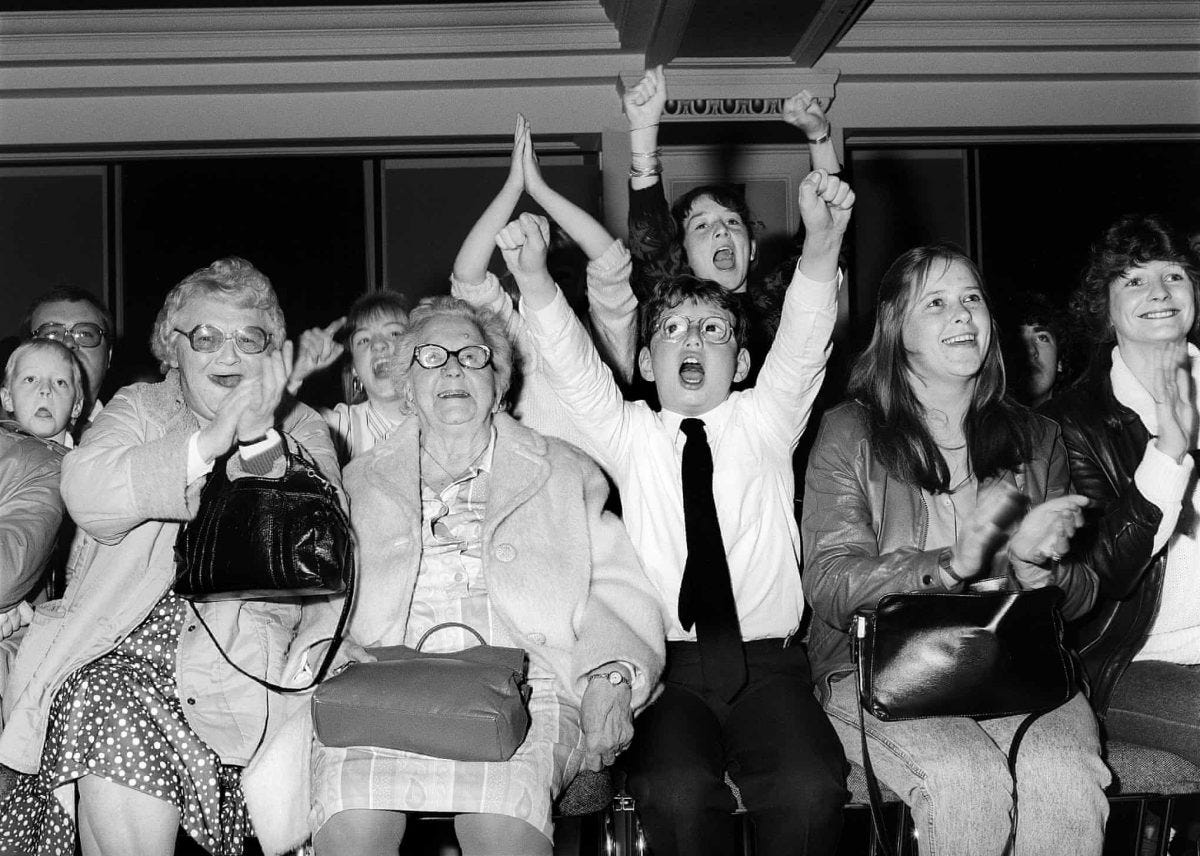
Which brings me to another problem. There's insufficient pressure for all this to change. Most of the people who are interested in politics are simple partisans. They regard politics as our nans saw wrestling in the 70s. They cheer the heroes and boo the heels and occasionally whack the latter with their handbags but they've no interest in how to improve the quality of the game (or even in whether it is fixed). And so important questions are neglected: how to connect politicians with rational thought; how to take money out of politics and create a proper democracy wherein everyone has an equal say; or how to improve selection mechanisms so that bad ideas and egregious incompetents are filtered out.
Of course, one might come up with answers to these. But doing so is - to paraphrase Marx - like writing recipes when you have no kitchen. Why, then, shouldn't we retreat from politics and tend our own garden?
* Note to pedants. I'm defining "politics" here as the media does - as court gossip about a handful of people in Westminster. I am interested in political matters such as how power is wielded and by whom. But "politics" is this sense is very different from "politics" in the media sense.